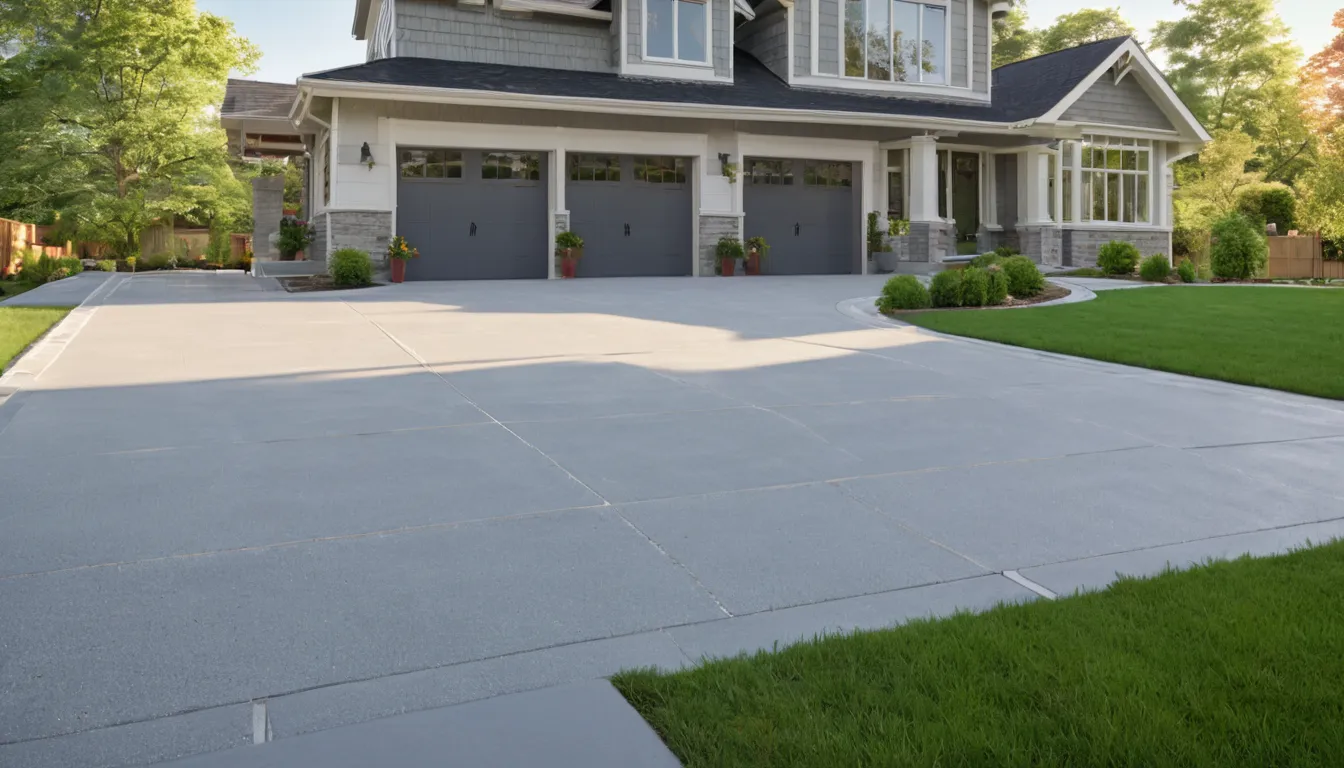
A concrete driveway is a hard, flat strip of poured concrete that links your garage to the street. A good one lasts for decades. A worn one gets harder to ignore each year. This page explains the choices in short words, so you know what to ask before anyone starts work.
Prabvisa Concrete is a referral service. We do not pour or finish concrete. We connect homeowners with independent local providers in the Lawrenceville area. Each provider sets its own prices, schedule and terms. You compare estimates, ask questions, and pick the one that fits your home and budget.
Is it time for a new driveway?
Walk your driveway slowly. Look down. Look at the edges. Look at where water goes.
Most people wait too long. A small crack turns into a big one. Then a big one turns into a bill. If you spot it early, you have more choices and more time.
Early signs to spot
Small signs come first. Watch for these:
- Thin cracks, about as wide as a pencil line
- Rough, flaky patches on the top layer
- Puddles that stay long after rain
- Dark stains where water sits
- Edges that crumble when you step on them
None of these means you need a whole new driveway today. They do mean it is time to look closer.
Signs that mean replace, not patch
Some damage is too big for a quick fix. Think about replacing if you see:
- Cracks wider than a quarter inch
- Slabs (the big concrete sections) sitting at different heights
- Sunken spots where the ground has washed away underneath
- Crumbling across most of the surface
- Cracks all over, not just in one place
A step up of half an inch or more is also a trip hazard. Take it seriously.
Concrete driveway repair or full replacement?
Concrete driveway repair works well for small, local problems. A provider can fill cracks, patch rough spots, or lift a sunken slab. This costs less than starting over.
Repair stops making sense when damage is everywhere. You can end up paying for patch after patch. Ask a provider to explain both paths and put each in writing. Then compare.
Request an Estimate
What a new driveway project includes
Most jobs follow the same steps. First, the provider's crew removes old concrete, if any. Next, they level the ground and add a layer of packed gravel, called the base. They then set wooden or metal forms, which are the edges that hold wet concrete in place. Steel bars or wire add strength. Then comes the pour, the finish, and the cuts that control cracking.
This kind of work is called concrete flatwork. That just means concrete poured flat, like drives, walks and slabs.
Choosing the size
Measure first. A one-car driveway is often about 10 to 12 feet wide. A two-car driveway is often 20 to 24 feet wide. Think about guests, a boat, or a second vehicle.
Wider costs more. Still, adding a little width now is cheaper than adding it later.
Choosing the thickness
Most home driveways are poured about 4 inches thick. Heavy trucks, RVs or delivery vans may call for 5 or 6 inches. Thicker concrete handles more weight.
The base under it matters just as much. A weak base is a common reason slabs crack early. Ask the provider how deep the base will be.
Choosing the finish
The finish is the look and feel of the top surface. You have a few common picks:
- Broom finish: light ridges that help grip in wet weather. Very common and usually the simplest to do.
- Smooth trowel: sleek, but can get slick when wet. Not ideal for slopes.
- Exposed aggregate: small stones show through. It looks rich and grips well.
- Color or stain: adds tone to match brick or vinyl siding.
In our area, storms and humid summers make grip a smart thing to ask about.
Water, slope and your foundation
A driveway should slope away from the house. Even a gentle slope helps. If water runs toward the walls, it can soak the soil near your foundation.
If you already see cracks in walls or sticking doors, talk to foundation repair experts before you pour. Fix the cause first. Then the new driveway has solid ground to sit on.
Permits and the street apron
The apron is the part of the driveway where it meets the street or sidewalk. Many towns own that strip. They often set rules for its width, slope and thickness.
Some places also ask for a permit for a new or wider driveway. Rules differ by town. Ask your local building office, and ask each provider who handles the paperwork.
Request an Estimate
Choosing a concrete provider
Providers in our network are independent businesses. Prabvisa Concrete does not vouch for any one job. So do your own checks. Ask each provider:
- Are you licensed and insured where I live, if that is required?
- Can you show photos of past driveways?
- Who handles removal, base work and permits?
- What does the written quote list, line by line?
- What happens if cracks show up early?
Get at least two written quotes. Compare the details, not just the total.
Timing and weather
Concrete needs the right weather. Very hot days make it dry too fast. Heavy rain can ruin a fresh surface. Ice storms and cold snaps slow the curing, which is the time concrete takes to harden.
Ask the provider how they plan for weather. A good plan has a backup date.
After the pour
Keep cars off for about a week, or as long as the provider says. Keep feet and pets off for a day or two. Light foot traffic comes first. Heavy weight comes last.
A sealer is a clear coat that helps block water and stains. Many providers suggest it after a few weeks. Rinse the surface now and then, and skip harsh de-icing salt in the first winter.
Your next step
Start with a quick look at your driveway. Write down what you see. Then ask a local provider what they would do and why.
Request a callback to check provider availability in your area, or request an estimate. There is no obligation.
Request an Estimate
What's Included
Old Concrete Removal
The provider breaks up and hauls away the worn driveway so the new one starts clean.
Base and Forms
Packed gravel and sturdy edges give the new slab a firm, level place to sit.
Pour and Finish
Concrete is poured, leveled and finished with the surface texture you picked.
Cuts and Curing
Control cuts guide cracks to straight lines while the concrete slowly hardens.
Typical new driveway costs in the U.S.
Prices vary by size, ground, finish and local rates. These are typical U.S. ranges only. Always ask for a written quote before you agree to anything.
| Item | Typical range | Notes |
|---|
| Plain broom-finish concrete | $6 – $12 per sq ft | Most common choice for home driveways |
| Tear-out of old concrete | $1 – $3 per sq ft | Higher if the slab is thick or hard to reach |
| Gravel base and grading | $1 – $3 per sq ft | Soft or wet soil can raise the price |
| Exposed aggregate or stained finish | $10 – $18 per sq ft | Adds look and grip; takes more labor |
| Permit and apron work | $50 – $500+ | Depends on town rules and street work |
| Typical two-car driveway, total | $4,000 – $10,000 | Size, finish and site access change the total |
Request an Estimate
How It Works
Look and Measure
Walk the driveway, note cracks and puddles, and measure the length and width you want.
Call or Request an Estimate
Request a callback to check provider availability, or use the request form to share your details.
Compare Written Quotes
Ask two or more providers to list removal, base, thickness, finish and permits.
Pick a Date and Prepare
Agree on a start date, clear the area, and move cars before work begins.
Why Call Prabvisa Concrete
Know Your Options
Plain words first. See the choices and likely next steps before you talk to anyone.
Local Providers
Providers in our network are independent and work near you, in the Lawrenceville area.
No Pressure
Ask questions, compare written quotes, and decide on your own time. There is no obligation.
Spot It Early
Learn the small warning signs so you can act before they become big, costly repairs.
Other Services